Showing posts with label Alice. Show all posts

Sunday, 9 March 2014

Hot Weather Care for Chickens - Part 3

Hot Weather Care for Chickens

Another consideration during the hot weather is the potential for flies to become a problem in the rear ends of the hens.  Our wheaten Pekin Alice is still laying, which is very unexpected considering she usually shuts down the egg factory by around Christmas time.  The muscles in her rear are all relaxed in order to facilitate the exit of her every second day egg release and it is resulting in the feathers all around and mostly immediately below her vent, getting fairly soaked in loose droppings.  

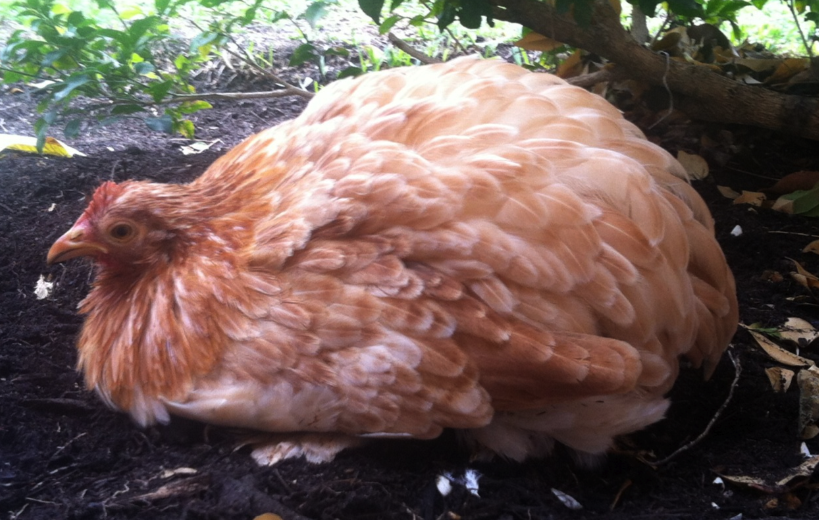
Alice - mid blow dry
I am worried that a fly will lay it's eggs in this mess and it will result in Alice becoming fly blown.  I have seen one fly blown hen when I was much younger and it was awful.  She was getting eaten alive around her rear, a red, bloody mess and had to be put down.  So to stop this from happening to our little lady, I have had to wash Alice every time I notice her rear becoming soiled.  Also, droppings are acidic and when left on the hen's skin, they burn, cause discomfort and scald the skin.  


Washing Poop Soaked Feathers


What you should use:
1. A pair of disposable gloves - you don't want to recycle poop covered items.
2. An old, clean and dry towel (maybe two).  One you're happy to dry the hen's rear with.
3. A confined space to wash your chicken - we opt for the laundry, door closed, hen tucked into the trough.  They obviously won't enjoy being wet and they'll run as soon as they get the chance, best to limit their escape routes.  
4. Clean, fresh, running water.  No soap, my Vet strongly does not recommend it as it strips the feathers and skin of their protective oils. 
5. Flat surface to dry the hen on afterwards.
6. A hairdryer is a nice way to finish off the process. 

How to wash the hen:
1. With your disposable gloves on and the hen in a secure position which allows plenty of water to access her rear, thorough soak her rear feathers, using a gloved hand to work ALL of the droppings thoroughly from her feathers.  
2. Keeping the water running over the area is the best way to go for moving the poop off and away. 
3. Do not leave a sopping wet bottom, half caked in droppings.  Work the droppings out with your gloved hands, rinsing thoroughly until the area is poop free.  Assuming the hen stays fairly much in place, this should take up to ten minutes only. 
4. Place the hen-suitable, clean and dry towel onto a flat and stable surface and lift the hen up onto it.  I recommend putting the towel in place before you start the wash - makes it easier to transfer the hen onto the towel at the end of the wash. 
5. Gently squeeze out the excess water from the hen's rear with the towel.  
6. If the weather is horribly hot (35C/ 95F +) you can take the hen back to her pen after you have toweled her dry.
7. If the weather is cool you absolutely must dry her thoroughly to stop her suffering in the cold for the next hour or two with soaking feathers.  I blow dry Alice (and all my chickens who I have washed over the years) in a gentle and thorough fashion.  
Alice - nearly the end of her Sunday wash. 
8. Blow dry the hen taking extra care to not burn her under the heat of the dryer.  Imagine you are drying the hair of a toddler.  Keep the blow dryer moving all around the area, keep it around 20cm (7 or 8 inches) from the hen and turn down the heat as the feathers begin to fluff.  Takes 10 - 15 minutes to do properly. 


I find that hens fall into a hypnotic state during the drying phase and many of mine lean droopingly against me, even the most wild natured seem to surrender.  

Note: crushing, squeezing or forcing the hen into submission to keep her still during the wash, is incredibly uncomfortable, distressing and likely to be very painful for her.  If you have to wrap her in one of the towels, so that her rear is exposed and the rest of her remains controlled, this is a much better scenario.  Just don't wrap her tightly, she needs to be kept in place, not trussed up ready for the oven.  

Alice - perfectly clean, rear view. 

Wednesday, 17 July 2013

Green Poop in Chickens - Part 3

Green Poop in Chickens - the turn around

And then again sometimes there's nothing you can do - despite doing everything you can.  The green poop reappeared in Holly early last week and was quickly accompanied by lethargy, then extreme thirst and finally by death.  I had Holly booked in with the Vet on Friday morning and on Thursday I gave her a cuddle on the couch and placed her back in the pen for her final sleep with her best friend Alice.  The turn around was swift - good on Sunday, a little less so on Monday and by Tuesday evening I was getting concerned.  It seemed her liver wasn't able to bounce back after all.  I had continued her night medication and she was doing so well.  Eating mountains of food, preening, talking, harassing Alice each night.  However it seems that her mid Winter moult had placed far too much pressure on her immune system, consequently her liver function and the end came quickly.  

I found baby Holly in the sleeping hutch on Friday morning.  Alice was out and about eating and completely at ease with the situation.  It's worse when the other hens are left lonely and pining and this is not the case here.  It is all the same a total blow, leaving only 5 hens when last year we had 10.  Again due to the ILT virus that the bantam Wyandottes introduced we are unable to restock the flock.  I did find that when having lost a pet, the introduction of a new girl to care for made a real difference and also reminded me of why I continue to keep my girls.  As we can't buy anymore hens at this point, I can't help but be resentful about the hens out there that would have come to live with us, that we could have given such a happy, healthy and high quality life.  Seems grandly unfair. 

I miss Holly.  She was such a single minded, determined, brave and diligent little hen.  Always ahead of everyone else, the first to have a go and the least afraid.  My brother is on standby to take in Alice should she start moulting whilst we leave the girls behind for a holiday soon.  The first sign of wheaten coloured feathers exploding all over the chicken pen and Alice will be scooped up and taken into my brother's home for warmth and great food.  It really can be a fight to hang onto the girls and I never regret one moment, one dollar spent, the loss of sleep, the extra washing - I only wish I could do more for them.  

I only had Holly for a little over 14 months and I think she was barely 18 months in age when she passed away.  So short a time and yet I miss her enormously.  

Holly (AKA Hollilicious as I liked to call her)


Sunday, 7 July 2013

Green Poop in Chickens - Part 2

Green Poop in Chickens - sometimes there's hope

I have been dosing Holly with prescription liver medication twice per day for one week now.  I am so happy to say that her poop is no longer vibrant green, she is eating regularly, stopped sleeping endlessly, started talking again and her colour is improving also.  

I really feel that without the medication that she would have been emaciated or dead by this time.  This seems to be the way, either the hen is taking great strides 3 or 4 days in or she has little hope. 

I am now cutting it back to once a day and I will continue this for another week.  

Holly is still really short on feathers and so will stay inside, on her heat pad and enjoying lots of fresh food.  I will put her back with the other hens once her new feathers have really come in - about 3 weeks from now.  

Here is Holly this evening.  She still has a few weeks to go but I am really pleased with her progress.  There is hope for chickens with liver failure issues. 


(Left to Right) Alice & Holly baking by the heater...again. 

Tuesday, 25 June 2013

Aggressive Hen

Options for an Aggressive Hen

I contacted our Vet to ask about options to deal with an aggressive hen after our buff Pekin hen Holly, went a bit feral recently and pulled several hundred feathers from her sister Alice's neck and back of head.  Holly was at the very end of her feather cycle, on the cusp of a full molt and became very aggressive in the last couple of weeks. 

We ended up separating Alice and keeping her in her own hutch inside for the week to break Holly out of her feather plucking behaviour.  Putting Holly inside would have been a disaster as she was so wound up and kooky that she would have run riot and screamed all day.  I do admit to love having my Alice in the house as she is such a sociable and sweet, little hen.  She chats away and comes into the kitchen to preen and watch us making breakfast.  If we move away she calls non stop until we come back to her.  But back in the hutch she settles in beautifully and relaxes completely. 

Hormone Therapy

So anyway, I was worried that if Holly did not calm down that Alice would be permanently needing her own bedroom.  I called the Vet and got some really interesting news about an option for Holly - a hormone implant.  Basically Holly could have a series of fortnightly injections or a one off implant placed under the skin between the tops of her wings (near the base of her neck).  It would be effective for between 3 - 6 months.  I figured it was definitely worth a go if Holly did not start molting and calm down. 

In the mean time we assigned Holly to our Jack Russell to keep her behaviour in check. 


However in less than a week Holly started molting.  She lost so many feathers she was shaking in a puffed up ball and looking miserable.  As Holly definitely has the ILT virus, she has been brought inside to keep her warm and well fed.  The worst thing for a hen with ILT is to be skinny, cold, losing weight and stuck out in Winter weather.  She was miserable and not eating for several days and then when her feathers stopped falling out, her appetite began to return.  She's stopped attacking Alice who comes inside for sleepovers and has gone from a 10 to a 2 on the crazy-ometer.  Just crazy enough to be her usual, slightly obsessive self. 

If anyone has tried the hormone implant for their hen I'd surely be enormously interested to find out the results.  

Holly, this morning - keeping warm, suburbhen style. 
 That's love by the way, I don't spoil my chickens...much. 

Tuesday, 4 June 2013

Feather Picking

Feather Picking in Chickens

Seems we have a feather picker in the flock.  When the girls came out of the sleeping hutch on Tuesday morning, I noticed that Alice's head was much lighter in appearance and upon inspection found that someone had plucked a large amount of feathers off her head and neck. 

Alice is a really gentle and submissive hen.  I have noticed our Silkie hen Farrah pecking away at her face whilst Alice just submits, frozen on the spot.  So to prevent us coming home to a bald birdie, we put Alice in a hutch in the lounge for the day until we could work out what was going on.

Yesterday Alice went out in to the garden with the other hens and took herself back into the pen after a few hours and settled in.  I watched her for a while and her sister Holly sidled up.  Holly loomed over the top of Alice, whilst Alice froze underneath.  Sure enough, Holly began to pull at Alice's neck feathers until she soon pulled one out.

Straight into the pen and I picked up Alice and took her back inside.  The problem I have is that Alice does quite well inside, settles into her hutch happily and loves pottering around the kitchen.  Where as Holly freaks out and demands to be released from the hutch by calling loudly and consistently and then poos everywhere out of anxiety.  With Alice inside, when she does go out with the other girls for some garden time, the rest of the flock act aggressively towards her to punish her for disappearing. 

The other issue with Holly is she is fairly single minded, predictable and very one directional in her orientation.  She is very focussed and not easily distracted, so she thinks it's just weird when I move her away from something I don't want her to be involved in and she just tries to go straight back to what she was doing in the first place.  Holly is also a bit aggressive at present, as she seems to be at the peak of her health and could do with a good feather moult and a drop in her crazy-cuckoo hormones.  We are thinking we may take her to the Vet for a hormone injection to chill her out if she does not start to moult in the next week or two. 


This is a real frustration as the girls have masses of space (usually feather picking is prompted by confined living conditions) and with the girls in good health at the moment, we really thought we could just enjoy them and not have to nurse anyone back in the house. 

Here you can see Alice's neck all exposed.  The back of her head has been thinned out and in doing so exposed some ingrown feathers which I teased out with my fingers.  That would be the only positive I can see from Holly's bad behaviour so far.  Having said that it is lovely to have our little girl in the house again.  We keep looking in the hutch and seeing Alice preening and bustling about and it is so heart warming.  Loving have her in the kitchen in the morning.  We had Rosie in last night for a sleep over with her.  It's unlimited gorgeousness. 

Tuesday, 26 March 2013

Bubbly Eyes in Chickens

Bubbly Eyes in Chickens

Don't ignore frothy, bubbly eyes in chickens.  Bubbly eyes are something I had only seen in one of my hens and it was for 48 hours in my biggest, porkiest and most sturdy hen, Jewel.  She woke up last Winter with a bubbly, swollen eye.  Panic, drama, Vet visit, medication.  Next morning - back to normal.  

In January I had three hens in five days with bubbly, swollen eyes.  This was due to Fowl Pox and ILT virus.  Angie had swollen, gooey eyes for days and I firmly believe that gentle cleaning really helped to get her eyesight back in order.  

Cleaning Bubbly Eyes

You'll need three things;  
1. Make up remover pads - the snazzy, more expensive type that don't fall apart and leave fibres and fluff behind. 80 pads cost about $3.50.  
2. Bottle of saline solution for eyes.  I got this at the chemist for $5 for a big bottle.  
3. Bottle of fake tears.  The kind you can get from the chemist for people with really dry, irritated eyes.  I got a bottle for $7 that should last for days and days.  

You'll need to keep the hen still.  I find it easiest to wrap the girls in an old, clean towel so that just her head is poking out, whilst at the same time allowing her to maintain a standing position.  

Take a fresh, clean make up pad and squirt on enough saline solution so that it is quite damp, almost dripping and therefore soft, gentle and squishy on the hen's eyeball.  Gently, calming and slowly, wipe any dirt or infected build up away from the hen's eyes and off and away from her face altogether.  Do not press firmly on the eye at any point. 

Throw out the make up pad once used.  Only wipe the eye with the clean and fresh area of the make up pad - do not continue to wipe over the eye once the pad is soiled or dirtied.  Be prepared to use 3 or 4 pads for each clean.  Once the eye is clean, place 1 or 2 drops of the fake tears solution in the eye.  I did this 2 to 3 times a days for each hen.  Each clean should take about 5 minutes to complete - gets easier and quicker as you practice more.  

You'll know that the eyes need another clean when the eye is either stuck closed from a build up of infectious material or wet, matted and clearly preventing the hen from being able to see from that particular eye.

Most of all - take your hen to your bird knowledgeable Vet for a professional diagnosis.  She may need anti biotics, anti inflammatories or other medications.  Your hen's health and comfort is completely in the hands of her owner - do unto your hen as any normal and responsible person would do to their dog or cat please. 

Hen's have hissy fits too

I had a funny moment cleaning Alice's eyes in this bout of illness.  I had the bottle of fake tears, ready to add a couple of drops to Alice's eyes after yet another cleaning and she lashed out and grabbed the bottle by the nozzle, pulled it away from me and hissed like a snake.  She clearly hated the process however her eyes went from wonky, shedding, frothing and blinded to clear and bright and beautiful after about 5 days of 2 to 3 times daily of careful cleaning.  


Baby Alice - at the end of her fowl pox and eyes in tact


Wednesday, 20 February 2013

3 in 4

Today we had our 3 year old white Silkie hen Angie put to sleep.  In less than 4 weeks we have lost Bantam Wyandotte Amelia, black Silkie hen Jetta and now Angie.  We had a flock of 9 to begin the year and it's so sad to see 6 beautiful girls remaining with no certainty or relief of this nasty run of ill health.
Angie - gone but never forgotten and always loved

ILT Testing

Angie has been sent to the WA Department of Agriculture to be tested for ILT.  There is no way to test for ILT other than post mortem.  It's really sad that Angie will not come back home for a proper burial.  We've only ever had 1 other hen in more than 15 years not come home and that was by nothing more than a poor decision on my behalf.  

I do hope that ILT is not detected.  This would then lead the way to other potentially less serious possibilities eg. fowl diptheria/ wet fowl pox or mycoplasma/ chronic respiratory infection   ILT means no new chickens.  Not unless we want to infect previously healthy birds with a vicious viral condition.  It would mean keeping those hens we do have until they have all passed away  After which we would basically raze the existing pen, wait several weeks and then considered starting from scratch.

Jetta - 9 years of loveliness.  Fowl Pox proved too much.


Fowl Pox

In the mean time we have had Wheaten Pekin hen Alice, black Silkie Farrah and Buff Pekin Holly all with Fowl Pox.  Alice went back in to the pen on Monday 18th February.  We kept her in the house for 17 days to try and stop the spread of the Pox virus.  Such a beauty.  Alice is so tame and gorgeous.  She would bounce out of her hutch once the door was unlocked and come in to the kitchen to preen on the floor, await feeding and have a chat.  If we went outside or out of view she would call and call.  I could hear her screaming from the kitchen, no doubt the neighbours could also hear her at 7:00am as I was feeding the other girls in the garden and I'd come running in the house to tell her everything was okay.  Our dog Madi developed a bit of a fancy for Alice, typical Jack Russell stalker.  Otherwise it was all smooth sailing.  I was really happy to see Alice lay her first egg in more than 3 weeks on Monday.  She's also massively fat (in a healthy hen way) and eating well.  I have great hopes for her and her sister Holly who is equally ravenous and portly.

A Crowing Hen

Our remaining girls Selene, Rosie and Jewel have shown no signs of Fowl Pox infection.  Though both Jewel and Selene are moulting and are ripe for all sorts of nasties.  The only odd behaviour is Selene crowing occasionally.  But that's pretty standard for her.  Being the dominant hen and having her hormones twisted up at the end of the laying season she's inclined to go rogue and lose the plot a bit.  It does her no harm and due to the hit and miss nature of the occasional crowing it does not bother the neighbours in any way. I've seen Selene faux mate with the hens on occasion.  She takes her role as head chicken very seriously indeed! 

Selene - a hen in disguise

Once Again, in Writing

It's really deflating caring for the girls when they're so sick and then thinking about writing it all down on top of the medicating, Vet visits, hutch cleaning, daily hen linen laundering, crop feeding.  It just goes on and on and as much as I love them and would do it all again it does feel pretty awful to then relive it all in writing.  So the Blog suffers as they suffer.  But I do hope to get Angie's ILT results within 1 week and either move forward or deal with a rather bleak future as best we can.          

Saturday, 1 December 2012

Alice in Wedding Wonderland

December 1st is a big day for a little hen.  Today Alice officially enters the world of the Commemorative Wedding Chicken.  

We bought Alice in April this year.  Such a sweet hen.  She is very friendly and gentle but also curious and quite a chatterbox.  Alice's colour is known as wheaten (dark brown/ orange neck and much paler feathers for the rest) and she is again a Pekin bantam by breed. 

Alice had a bumpy start with us.  Alice and her sister Holly came with a grotty bug on board - Coccidiosis.  This resulted in blood in their droppings and dragged down their immunity generally.  It seems to attack the gut and results in lethargic and sickly looking birds.  It is also contagious.  We had our flock tested but they were thankfully uneffected, as Holly and Alice had been living in the lounge room- in a proper chicken hutch!  Not on the carpet or couches, I do draw the line somewhere...eventually.  Though I admit to allowing them out on to the carpet to play each day and that we may have taken a lot of video footage of their play time.  

Alice - August 2012
Alice and Holly had to have liquid medication, 3mls twice a day, for 7 days to deal with the Coccidiosis bug.  The first time Alice was given her medication she inhaled most of it.  I got a phone call and could hear her gasping for breath, coughing, struggling and on the edge of life.  Our regular Vet is nearly an hour away from home and they advised by phone that she be taken to our nearest Vet immediately.  Unfortunately they were in surgery so could not see Alice.  Off again only this time Alice had to go to a Vet that I really don't trust.  I took a hen there once and this Vet gave her the wrong medication, did not given her water or feed for more than 12 hours (surgery was not on the agenda, so there was no excuse for this) and charged me more than $400 for one night of errors, pain and ill treatment.  To say I was trepidacious was an understatement.  But there was no choice, Alice was suffocating.  


I don't think the Vet was terribly impressed with our attitude.  I insisted that they take instruction from our regular Vet over the phone and would not take their word for it that they knew what they were doing.  Basically the treatment when a bird has aspirated liquid in to their respiratory system is to place them on oxygen until the symptoms are firmly under control.  Little Alice was only a few months old and I can only imagine how helpless she would have looked receiving the treatment.  After a couple of hours she was okay to either stay overnight (no thank you) or go home to us for constant supervision and a supply of antibiotics to prevent any potential infection.  She coughed and spluttered here and there but she did improve over the next several days.  The dreaded part being that we still had to keep administering the liquid medication for the Coccidiosis treatment twice a day.  I got put in charge of this and it felt like I was trying to juggle blown glass with concrete gloves on, such was my level of anxiety that I was going to destroy poor Alice with one ill timed liquid dosage.  But we got there in the end.  She did not get a secondary infection and the Coccidiosis was cleared from her system - confirmed with a test of her leavings.  

In September Alice started to lay.  The sweetness of her diligently taking to the nest to lay her small and beautiful 40gram eggs, warms my heart.  Me going crazy because some of the eggs were initially streaked with blood.  It must be a confusing and uncomfortable time.  She would have been about 7 months old at the time.  

In October I decided that she may be the perfect candidate for 2 friends of mine who are having their wedding today.  Alice was nominated to be their Commemorative Wedding Chicken.  She is the loveliest little hen and I don't think I've known such a sweet nature in quite some time.  We love to pick her up as she chats away.  I'll say something to her and she'll chat back everytime.  Such a sweetheart.  


So I welcome Alice to the exclusive Commemorative Wedding Chicken group and wish the couple she represents a life of happiness, love, strength, unity and health for all their lives.

Congratulations L and B on your special day.  xx

Alice - 30 November 2012